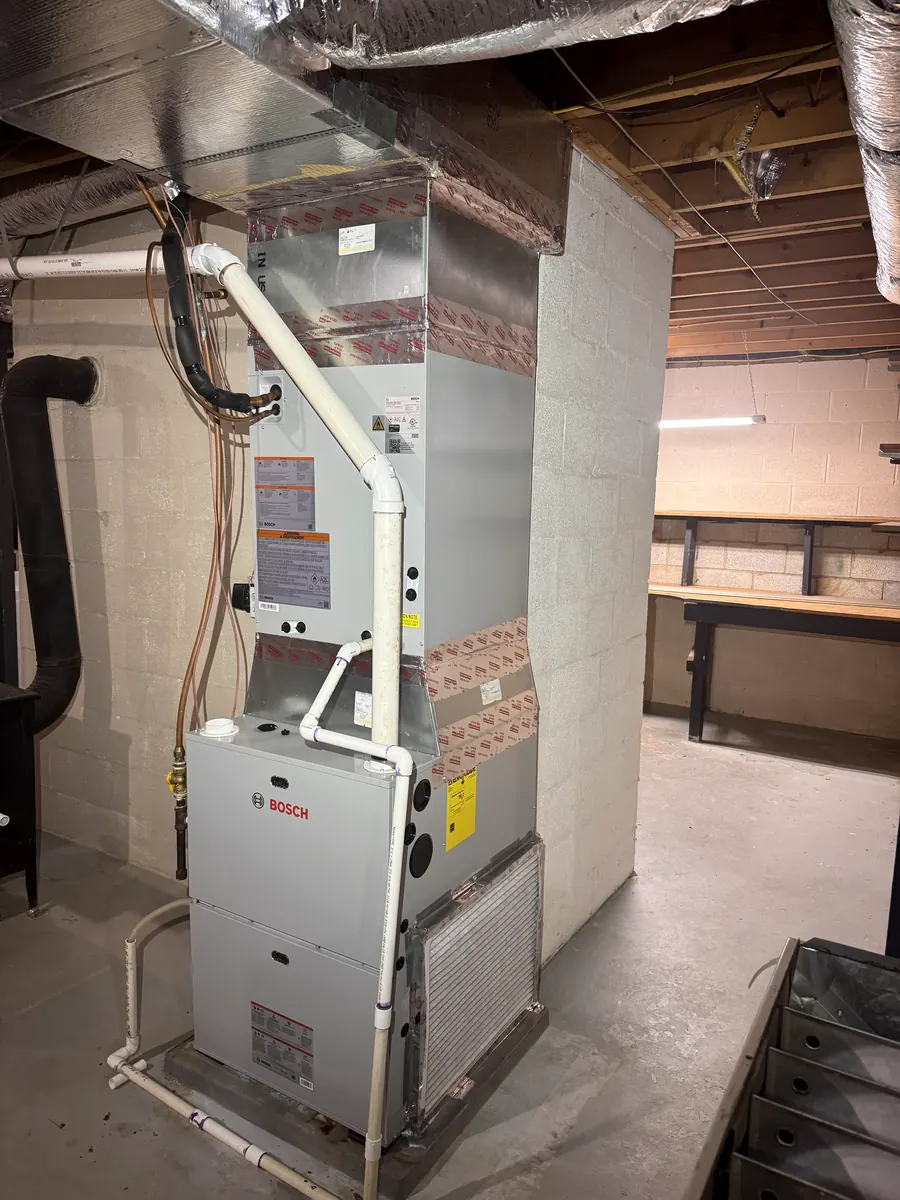
Heat pump or gas furnace? What makes sense in a Kentucky winter
Central Kentucky winters are mild most of the time and cold in snaps. Here is how to decide between a heat pump, a gas furnace, and a dual-fuel system for your home.
If you are replacing a heating system in Central Kentucky, the first real question is not which brand — it is what kind of heat. A heat pump, a gas furnace, or a dual-fuel setup that uses both. Our winters are the reason this is a genuine decision here and not a formality. We get long stretches of mild 40s and 50s, broken up by a few hard cold snaps. That weather pattern changes the math, so here is how we walk a homeowner through it.
How a heat pump handles Kentucky cold
A heat pump does not burn fuel. It moves heat from the outside air into your home, which is remarkably efficient in mild weather — and mild weather is most of our winter. Down into the 30s and even the high 20s, a modern heat pump heats your home for less than a furnace costs to run. The old reputation that heat pumps cannot handle cold comes from older equipment. Today's units hold their own through the vast majority of a Central Kentucky winter.
The honest limit is the deep cold. When the temperature drops into the teens and single digits — which happens here, just not often — a heat pump works harder and leans on electric backup heat, and its efficiency edge shrinks. For an all-electric home that is fine; the backup carries the few coldest days. For a home with gas already run to it, there is a better answer.
Where a gas furnace still wins
A gas furnace makes its own heat by burning natural gas or propane, so outdoor temperature does not change how well it works. On the coldest morning of the year it puts out the same warm air as it does in November. If your home already has a gas line and a working flue, a high-efficiency furnace is a strong, simple choice — especially if you want the hottest possible air out of the vents, which some people simply prefer.
The trade-off is that a furnace only heats. You still need an air conditioner for summer, so a furnace is usually paired with a straight AC unit. A heat pump, by contrast, is your cooling system in summer and your heating system in winter in one piece of equipment.
Dual-fuel: the Kentucky sweet spot
A dual-fuel system pairs a heat pump with a gas furnace and lets the system choose. The heat pump runs during the mild weather that makes up most of our winter, where it is cheapest. When a cold snap drops the temperature below the point where the furnace is more efficient, the system switches to gas automatically. You get the low running cost of a heat pump on normal days and the brute-force heat of a furnace on the coldest ones.
For a Central Kentucky home that already has gas, dual-fuel is often the best long-term value. You are not betting on a mild winter or paying furnace prices to heat on a 45-degree day. The system picks the cheaper source for the day's weather, every day.
So which one is right for your home?
It comes down to what your home already has and how you weigh up-front cost against running cost. All-electric home with no gas line: a heat pump is almost always the move. Gas already run and you want simple, powerful heat: a high-efficiency furnace with an AC. Gas available and you want the lowest running cost over the life of the system: dual-fuel. None of these is a wrong answer — they are different trade-offs, and the right one depends on your house.
The piece that trips people up is sizing and setup, not the fuel choice itself. We will look at your home, your existing lines, and your comfort priorities, then give you real numbers on each option before you decide. Start with the instant estimate or call the shop and we will lay out what fits your house.