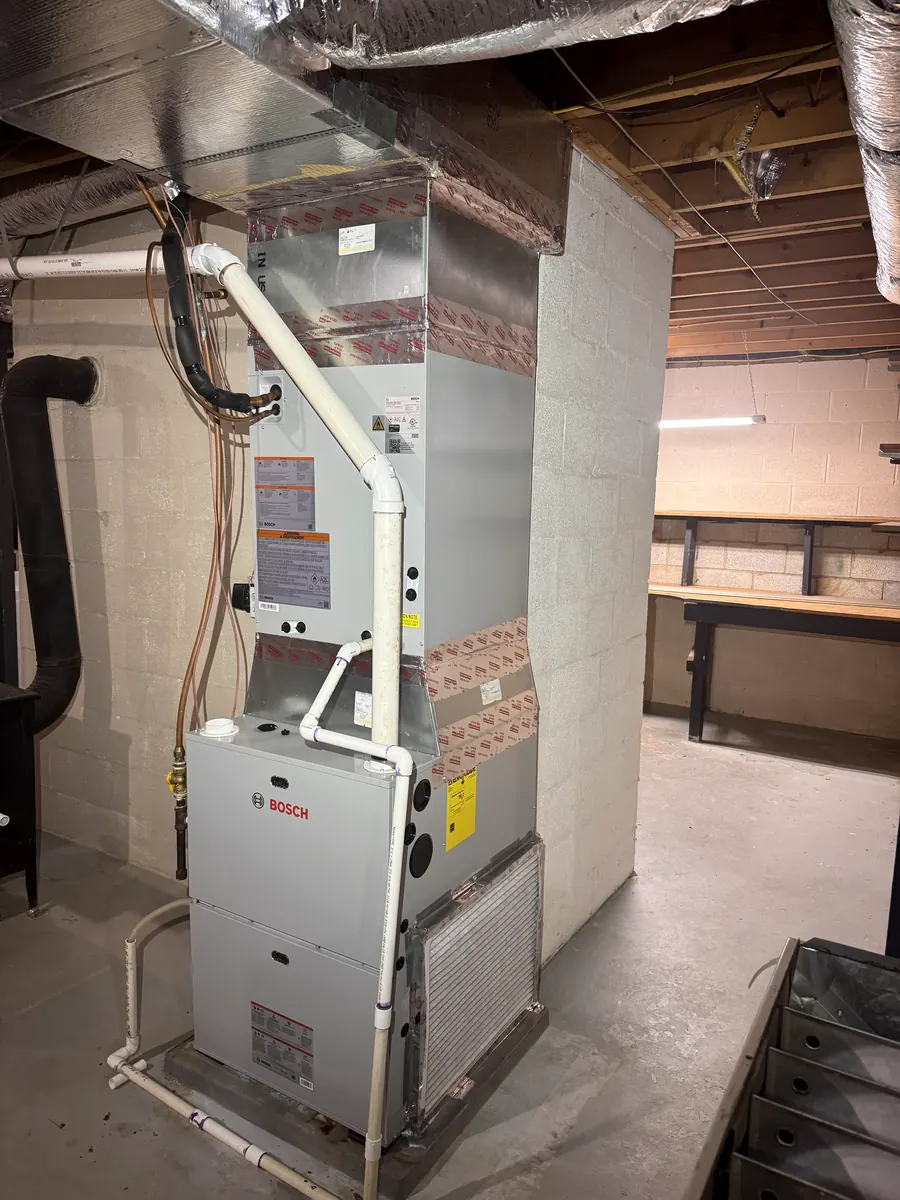
Why does my furnace keep turning on and off?
A furnace that turns on and off every few minutes is short cycling. Dirty filters, a bad flame sensor, or a poorly placed thermostat are common causes.
A furnace that keeps turning on and off every few minutes is short cycling. The most common causes are a clogged air filter that makes the furnace overheat, a dirty flame sensor, a thermostat in a bad spot, or a furnace that is too big for the house. Some are easy fixes. Others need a technician.
What normal furnace cycling looks like
Every furnace turns on and off. That is how it holds the temperature you set. On a mild day it might run a short while and then rest. On a cold night it runs longer and more often. A normal cycle has a clear pattern: the inducer motor starts, the burners light, the blower kicks on after a short delay, warm air comes out, and the furnace runs until the thermostat is satisfied.
Short cycling is different. The furnace starts up, runs for a few minutes or less, and shuts down before the house is warm. Then it starts again soon after. Sometimes the burners light and go out within seconds. You may notice rooms that never quite get comfortable, a blower that runs after the flame goes out, or a furnace that seems to be working all day without catching up.
Common causes of short cycling
- A dirty air filter. This is the first thing to check. A clogged filter starves the furnace of air, the heat exchanger gets too hot, and the high limit switch shuts the burners off to protect it. Once it cools, it starts again
- A dirty flame sensor. The flame sensor proves the burners lit. When it gets coated, the furnace lights, cannot confirm the flame, and shuts the gas off within seconds. It will retry a few times and may lock out
- Thermostat location or wiring. A thermostat near a supply register, a sunny window, a lamp, or a drafty door reads the wrong temperature and shuts the furnace off early
- An oversized furnace. A furnace that is too big for the house heats the air near the thermostat fast and shuts off before the rest of the house catches up
- Blocked or closed vents. Closing too many registers or having crushed ductwork restricts airflow and causes overheating
- Flue or venting problems. A blocked vent pipe or a failing inducer can trip the pressure switch and shut the furnace down
- A failing limit switch or control board that shuts the burners off when it should not
Why it matters
Short cycling is hard on equipment. Every start puts wear on the igniter, inducer motor, blower motor, and controls. A furnace that starts far more often than it should wears out parts faster. Overheating from poor airflow also stresses the heat exchanger, which is the part that keeps combustion gases separate from the air you breathe.
You also pay for it in comfort. A short cycling furnace tends to leave cold spots and uneven rooms because it never runs long enough to move warm air through the whole house. In older homes in Lancaster, Danville, and Harrodsburg with long duct runs, the far bedrooms often feel it first.
If your furnace is short cycling and you also smell gas, hear a loud boom on startup, or your carbon monoxide alarm goes off, turn it off, leave the house if needed, and call your gas utility or 911 first.
What you can check yourself
- Replace the air filter. If it is gray and caked, swap it and watch the next few cycles
- Open all supply registers and make sure furniture or rugs are not blocking them
- Check the return grilles too. They should be clear and pulling air
- Look at the thermostat. Is it near a heat source, in direct sun, or on an outside wall? Is it set to heat and not fan only?
- Replace thermostat batteries if it uses them
- Look outside at the furnace vent pipe, if it exits through a wall, and make sure snow, leaves, or a nest are not blocking it
If a fresh filter and open vents fix it, you are in good shape. If the furnace still runs only a few minutes at a time, or you see the burners light and go out right away, it is time for a service call.
What a technician looks for
A good diagnosis follows the furnace through a full cycle. We watch the sequence of operation, check the temperature rise across the heat exchanger, measure static pressure in the ductwork, clean and test the flame sensor, check the pressure switch and inducer, test the limit switch, and look at the error codes stored on the control board. Most modern furnaces blink a code that points us toward the problem.
If the furnace is oversized, that is not a part we can swap. It is a sizing issue. Our post on sizing a new system with a load calculation explains how the right size gets chosen, and why bigger is not better. If airflow is the problem, the fix may be in the ducts. See our ductwork services for what that involves.
How GraceLand Air handles it
We are a family-owned HVAC company in Lancaster, licensed under Kentucky Master HVAC license HM06402, and we work on all furnace brands. We find the cause first, then give you a fixed price before any work starts. You approve it before anything happens. Diagnostic plus repair usually runs $180 to $340.
Many short cycling problems trace back to things a tune-up catches early, like a dirty flame sensor or a weak inducer. Our $89 tune-up or $149 yearly plan with spring and fall visits keeps those small issues from turning into a no-heat call. Learn more on our maintenance page.
Frequently asked questions
Q: How long should a furnace run per cycle? A: It varies with the weather and the house. A few minutes on a very mild day can be normal. If it shuts off in a minute or two every time and the house stays cold, that points to short cycling.
Q: Can a dirty filter really make a furnace shut off? A: Yes. Low airflow lets the heat exchanger overheat, and the high limit switch shuts the burners down to protect it. It is the most common cause we see.
Q: Is short cycling dangerous? A: Usually it is a wear and comfort problem. It can be a safety issue when it comes from venting problems or overheating, so it is worth having checked rather than ignored.
If your furnace will not stay on long enough to warm the house, our heating repair team can find out why. You can also contact us to schedule.